About Me

My photo
Toronto, Ontario, Canada
"To take a photograph is to align the head, the eye and the heart. It's a way of life." ~ Henri Cartier-Bresson
Showing posts with label Philippe Halsman. Show all posts

Monday, December 26, 2022

Sid Kaplan ~ Photographer Profile

Sid Kaplan was born in The Bronx in 1938. At the age of ten he became enamoured with the seemingly magical alchemy of the dark room. Seeing the latent image slowly reveal itself on photographic paper had him hooked for life. 

Kaplan gained notoriety as a master black-and-white printer, producing the work of other photographers such as Robert Frank (whose photographs he printed for 35 years), Philippe Halsman, Duane Michals and Weegee. 

Despite this esteemed circle, Kaplan’s career was primarily spent in obscurity, literally as much as figuratively. His own work has finally garnered him much deserved admiration. 

Kaplan’s work is available for purchase at the prestigious Les Douches La Galerie in Paris


New York City, 1999


Sid Kaplan has mentioned that the biggest highlight of his career was the day when he took a break from the darkroom with Mr. Frank. The two of them walked to a local bar for a beer when they ran into another photographer who lived next door, W. Eugene Smith. They invited him to join them and they spent the evening together swapping stories and comparing their royalties from the Minamata and The Americans. "This reinforced my feeling that photography was best practiced as a gentleman's hobby like Lartigue or Steiglitz. 

"I never wanted it to become just a job where editors' art directors and deadlines ruled; that would make me crazy and demoralized. Printing other people's work gave me the bucks to pursue my hobby and photograph what I want to without answering to anyone"


One Madison Ave, New York City, 1977-79 © Sid Kaplan 


Twin Towers, New York City, 1977-79 © Sid Kaplan 


Robert Frank introduced Kaplan to poet Allen Ginsberg, his neighbor and longtime friend, who would come directly to the darkroom to advise him on how to print portraits of Peter Orlovsky and William Burroughs. 


Check out video on Kaplan via link below. 

Wednesday, April 17, 2013

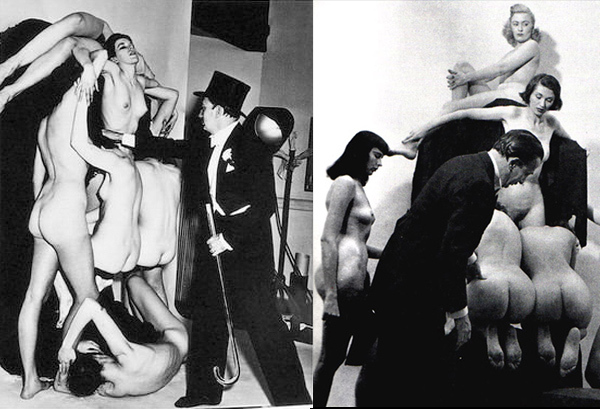
Behind The Scenes ~ “In Voluptas Mors” by Salvador Dali & Photographer Philippe Halsman

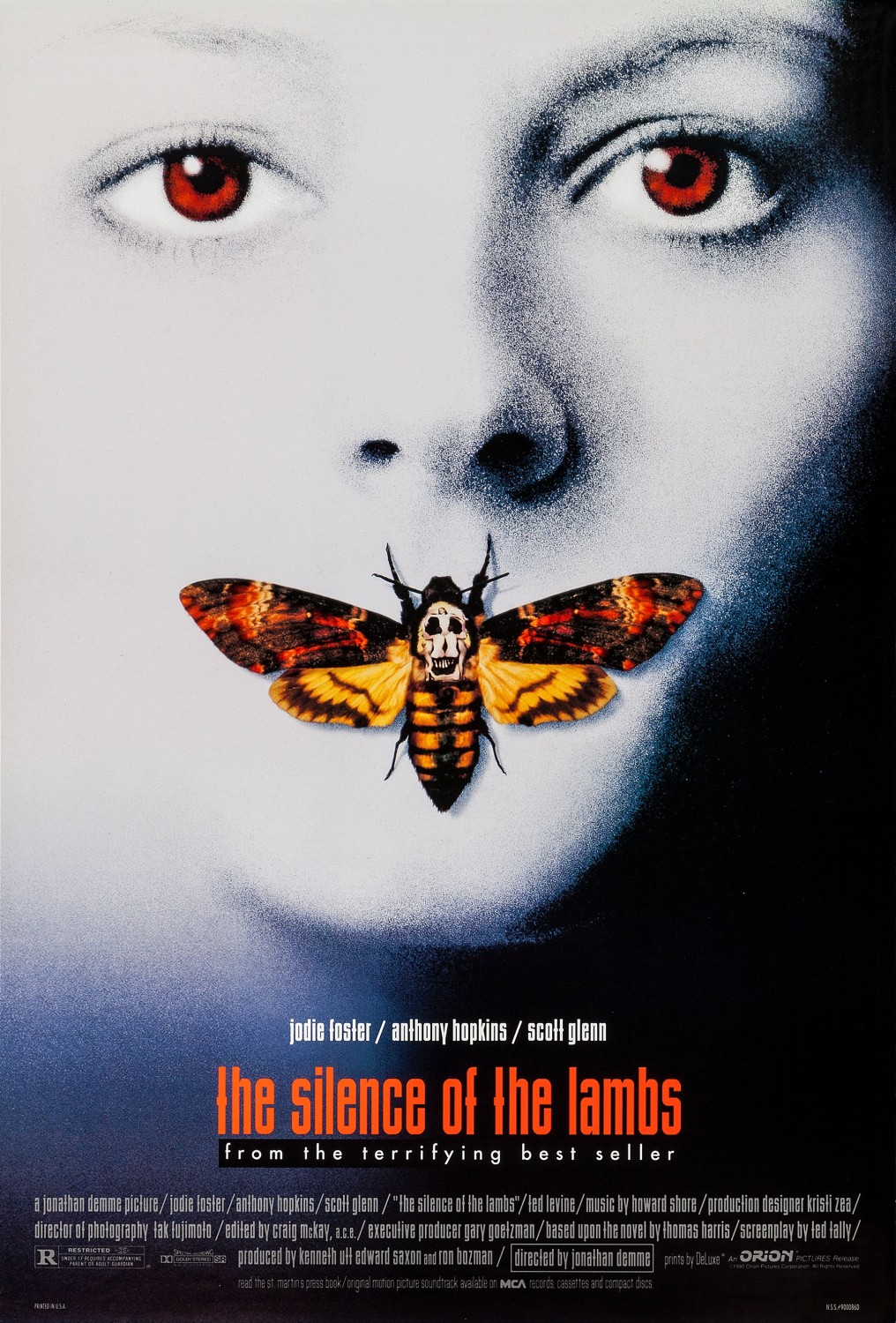
In Voluptas Mors ( “Voluptuous Death”), a surrealistic portrait of Spanish artist Salvador Dalí, made in collaboration with photographer Philippe Halsman (1951). The image depicts Dalí posing beside a giant skull, a tableau vivant (or “living picture”) comprising seven nude female models. Halsman and Dali took three hours to arrange the models according to a sketch by Dalí. A version of In Voluptas Mors was used subtly in the poster for the film The Silence of The Lambs.


1951– Nude women posed by Dali forming a skull entitled “In Voluptas Mors” –photograph by Philippe Halsman (in collaboration with Salvador Dali)


 “In Voluptas Mors” by Salvador Dali & Philippe Halsman, which you may recognize from the movie poster for “The Silence of the Lambs”–was  used to symbolize the seven victims in Jonathan Demme’s classic film…


Silence of the Lambs poster close up of In Voluptas Mors


What at first may appear to be merely an example of memento mori (Latin for “remember (that you have) to die”) is actually a more complex fusion or interplay between notions of “sex” and “death”. The depiction draws upon the symbolic tradition of vanitas (from the Latin literally meaning “emptiness” or “insubstantial”), an artistic style which served as a reminder of the transience of life, the futility of pleasure, and the certainty or inevitability of death. What is unusual here is the incorporation of voluptas or voluptuousness (expressed through the female nudes — “Voluptas” being a character in Greek mythology, daughter of Eros and Psyche, and goddess of “sensual pleasure”) within the physical constitutive structure of the symbol of vanitas itself(the human skull). The image presents a fusion of eros (erotic or sexual love) and thanatos (death) in a single object (therefore, in voluptas mors — quite literally one finds “death in the voluptous”). One should also observe the counterposition between the figures of the male artist and female subjects which raises questions about their relationship to one another.[via androphilia]