About Me

My photo
Toronto, Ontario, Canada
"To take a photograph is to align the head, the eye and the heart. It's a way of life." ~ Henri Cartier-Bresson
Showing posts with label portrait photographer. Show all posts

Monday, May 27, 2013

Photographer Profile ~ Olaf Heine

Olaf Heine (Born 1968 in Hanover ) is a German photographer specializing in celebrity and band portraits. He has photographed Iggy Pop, Sting and Snoop Dog to name a few.

"I like to work with people. The end result - the photography of people - is secondary. The creative process and the contact with the people I take pictures of, that’s the most important thing. That’s why I don’t really feel comfortable in the fashion scene, photographing models. Rather, I see myself as a creative person and I like to be surrounded by other creative people. I have always loved music. I certainly always had a thing for the travelling circus atmosphere of international rock and roll. My quest has always been to mix with other people and swap ideas, and that’s how I came to focus on portraits." ~ Olaf Heine


Iggy Pop

"Olaf is blessed with a clear and inescapable 
German eye. You better run, or fight back."
~ Iggy Pop


Snoop Dog
Ray Liotta
Don Cheadle

Sting

"It takes a rare photographer like Olaf to get behind that mask, to reveal the vulnerable soul behind. 
I do not wish to give myself easily to the eye of a camera unless the person holding it is at risk too."
~Sting 


Bon Jovi


Chris Cornell


Richard Ashcroft (Verve)


Road trip with Iggy


Wednesday, January 9, 2013

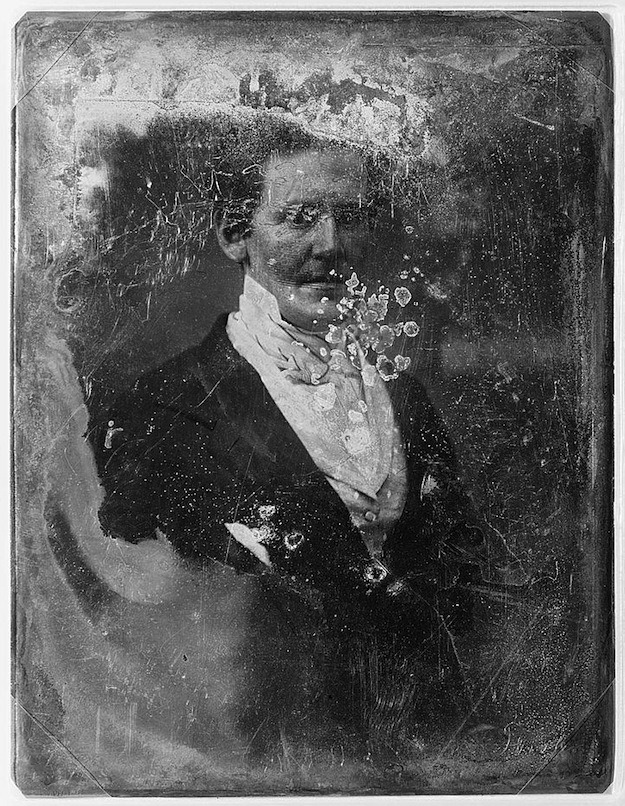
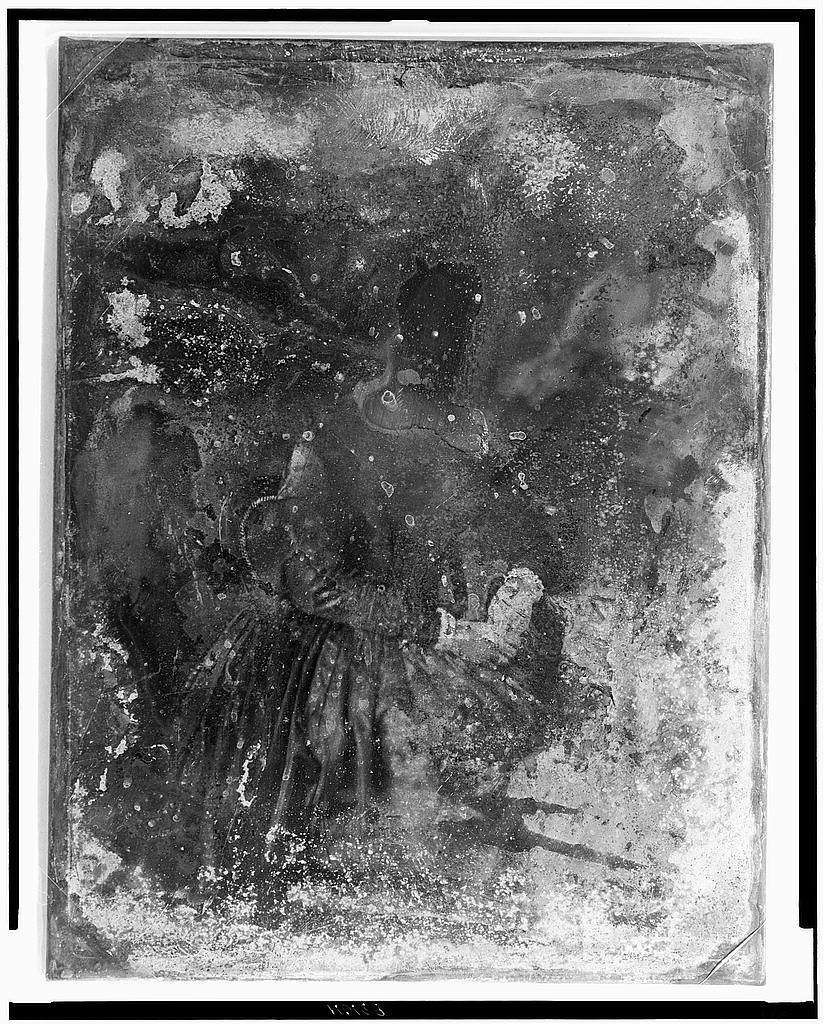
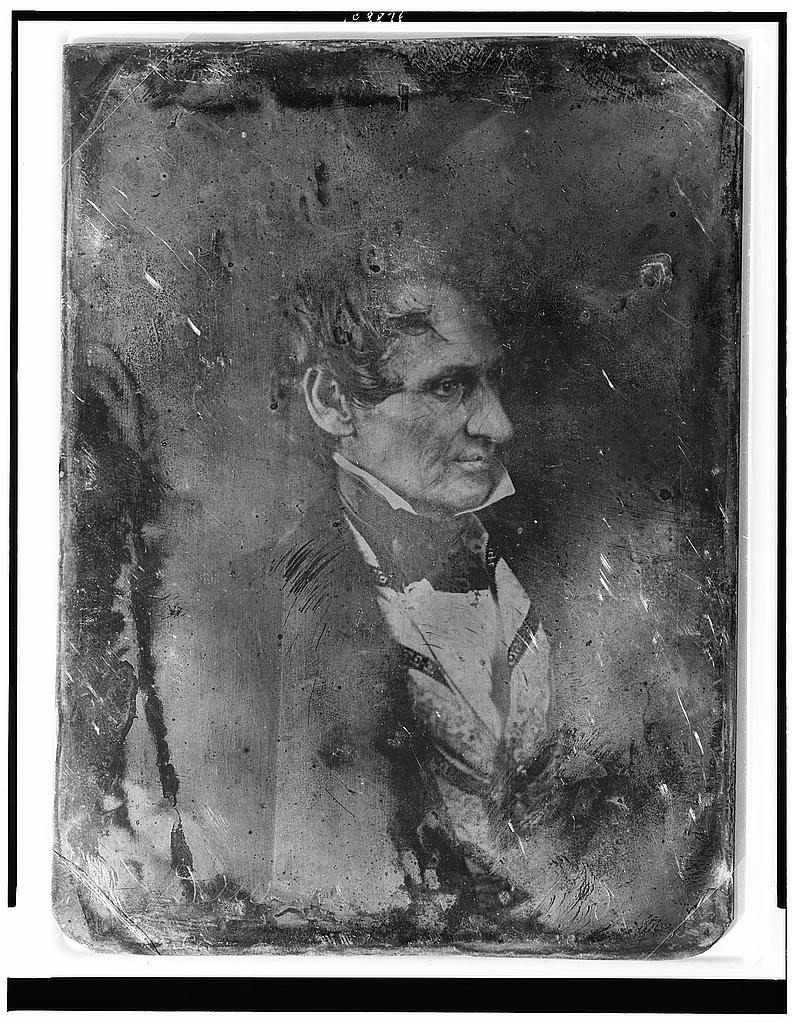
Enigmatic Daguerreotype Portraits from 1840-1860

A beautiful and sublime glimpse into the past
The daguerreotypes below are from the studio of Matthew Brady, one of the most celebrated 19th century American photographers, best known for his portraits of celebrities and his documentation of the American Civil War which earned him the title of “father of photojournalism”. The Library of Congress received the majority of the Brady daguerreotypes as a gift from the Army War College in 1920. [via publicdomainreview]


Unidentified man, about 30 years of age. Photographed between 1844 - 1860

Unidentified woman, about 20 years of age (taken between 1851 and 1860)

Unidentified U.S. Army officer

James Buchanan

Portrait of unidentified man [between 1844 and 1860], by Mathew Brady’s studio.

Bishop Frederic Baraga holding his Dictionary of the Otchipwe Language

William Cullen Bryant

William C. Dawson


James Duncan

Asher Brown Durand

Memucan Hunt

John M. Washington


Zachary Taylor and his cabinet, all seated except President Taylor

 Left to right: William Ballard Preston, Secretary of the Navy; Thomas Ewing, Secretary of the Interior; John Middleton Clayton, Secretary of State; Zachary Taylor, Twelfth President of the United States; William Morris Meredith, Secretary of the Treasury; George Washington Crawford, Secretary of War; Jacob Collamer, Postmaster General; Reverdy Johnson, Attorney General.

Friday, October 26, 2012

Photo Icons: William Klein + Daido Moriyama ~ Double Feature (part two)

Part Two: Daido Moriyama 

 Daido Moriyama is the most celebrated photographer to emerge from the Japanese ‘Provoke’ movement. His grainy high contrast black-and-white photographs, focused on the urban environment of post-war Tokyo’s Shinjuku district, echo those of Klein’s New York. Like Klein, Moriyama has consistently revisited, reinvented and reworked his photographs within a process of constant flux. The Tate Modern’s latest exhibition ‘William Klein + Daido Moriyama‘ brings together the work of the two photographers as a double feature—side by side retrospectives of photographers whose work is inextricably linked but independently minded. [Via Time Lightbox]
See more of Daidos' work here


Photo Icons: William Klein + Daido Moriyama ~ Double Feature (part one)

Part One: Wilima Klein

William Klein’s urgent, radical, gritty, blurred and out of focus photographs are as dynamic and visceral as any the medium has produced. His revolutionary magnus opus ‘Life is Good & Good For You in New York’ is an uncompromising, groundbreaking portrait of urban life, which at the time of its publication in 1956 not only shocked the established order, but reinvented the photographic document and is now widely regarded as one of photography’s greatest and most influential works.  [Via Time Lightbox]


Thursday, March 1, 2012

THE AFGHAN BOX CAMERA PROJECT

The Afghan Box Camera Project provides a record of the kamra-e-faoree (instant camera) which as a living form of photography is on the brink of disappearing in Afghanistan.

The Afghan Box Camera is simply a box-shaped wooden camera, traditionally used by photographers working on the urban streets, who produce, by-and-large, instant identity portraits for their clients. This intriguing and insightful project began when Lukas Birk and Sean Foley saw their first box camera in the north of Afghanistan in 2005 while researching tourism in conflict zones. Lukas Birk then built several cameras to explore the technical possibilities of the tool and in 2011 they both made their way back again to Afghanistan to document the last remaining box camera photographers in Kabul and Mazar-e-Sharif.

As of June 2011 Afghanistan is one of the last places on earth where photographers continue to use the kamra-e-faoree for means of making a living. The hand-made wooden camera is both camera and darkroom all in one and generations of Afghans have had their portraits taken with it, usually for identity photographs. At one stage it was even outlawed when former rulers of Afghanistan, the Taliban, banned photography, forcing photographers to hide or destroy their tools.

If you would like to help. please visit afghanboxcamera.com


say "جبن !" (cheese)


“Right now we can still talk about it as a living form of photography, maybe for another couple of years, before it will completely disappear,”~  Birk 


 Hand tinting the negative