About Me

My photo
Toronto, Ontario, Canada
"To take a photograph is to align the head, the eye and the heart. It's a way of life." ~ Henri Cartier-Bresson
Showing posts with label war photographer. Show all posts

Monday, November 23, 2015

FAPA 1ST PLACE WINNER for PHOTOJOURNALISM ~ Photographer Maxim Dondyuk

Maxim Dondyuk (Ukraine, 1983) is a documentary photographer based out of the Ukrain. He began his career in 2007 and went freelance in 2010. Shortly after going freelance Maxim received Noor-Nikon Masterclass award in Documentary Photography in 2011

The list of his grants and awards is long but among them are: Magnum Photos competition ‘30 under 30’ for emerging documentary photographers, Finalist of the W. Eugene Smith Grant in Humanistic Photography, Finalist for the FotoEvidence Book Award, Grand Prix ‘Best Global Health Story’ of the BD’s Hope for a Healthy World Photo Competition, Grand Prix of the ‘Best Photo of the Year’ at the contest ‘Photographer of the Year’, shortlist in the portraiture category of Sony World Photography Awards etc.

Maxim collaborates with many international editions and online media. His photos were published in TIME, Der Spiegel, STERN, Paris Match, Rolling Stone, PDN, Bloomberg Businessweek, Russian Reporter, Esquire etc. Also he works in cooperation with international organizations, such as the International Committee of the Red Cross (ICRC) and the World Health Organization (WHO).

 Maxim’s works are in private and museum collections worldwide. ( VIA photoawards.com)


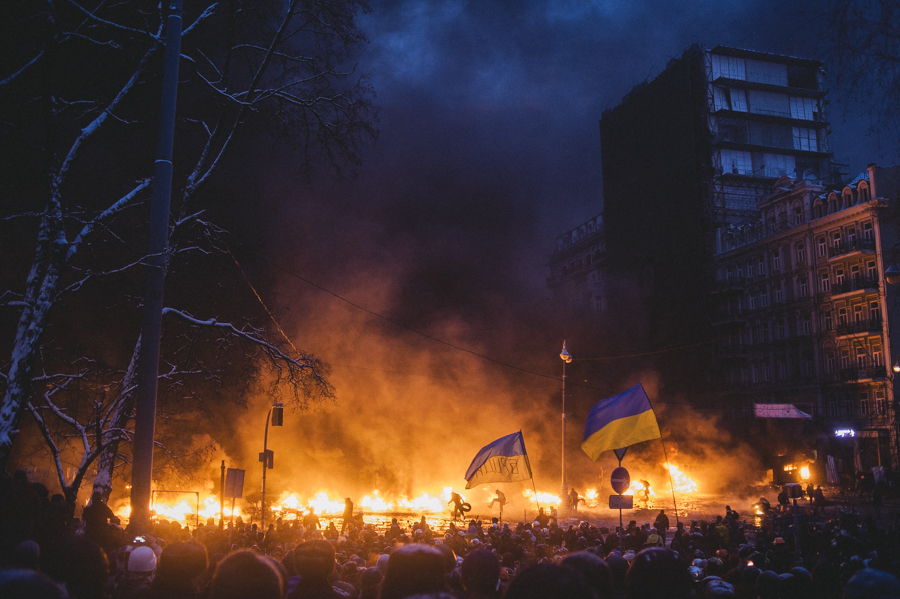
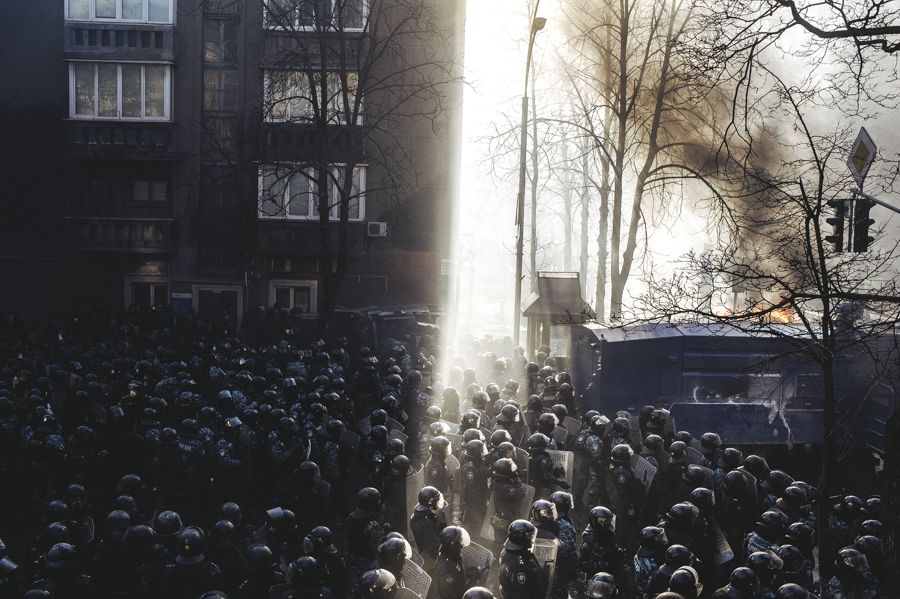
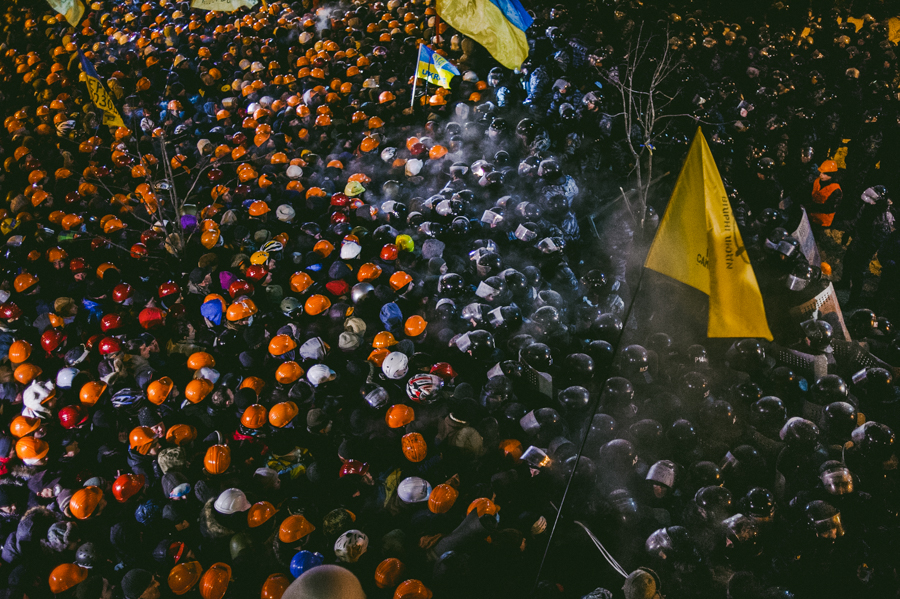
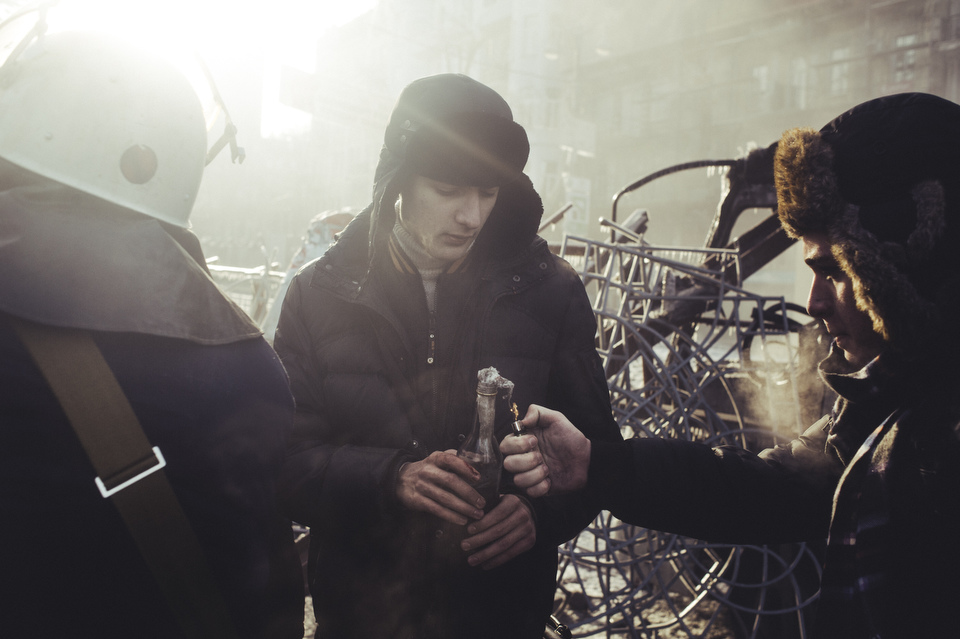
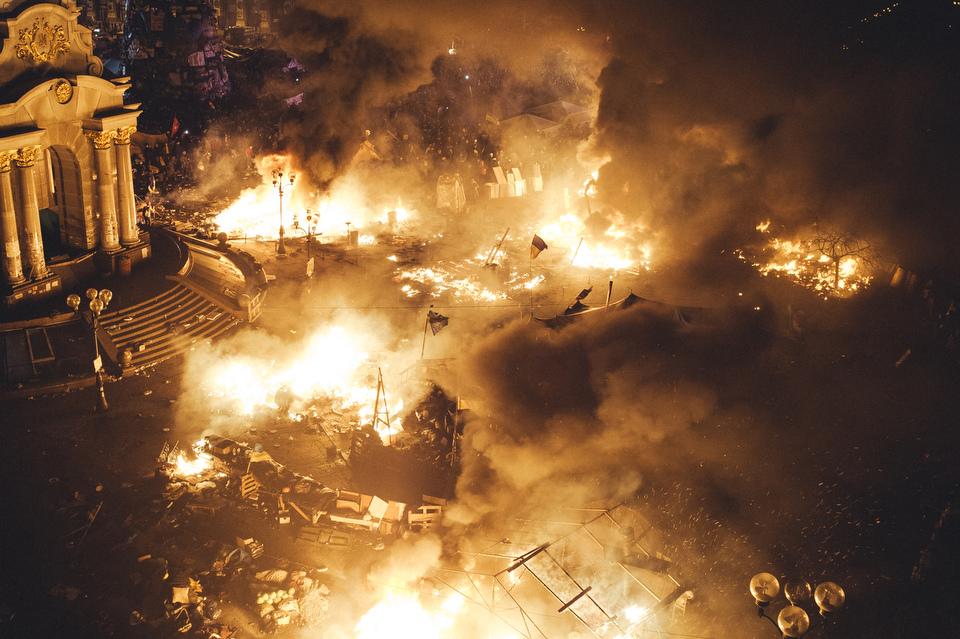
"Winter 2013 changed Ukraine. 3 months of bloody clashes, tears, fear, Molotov cocktails, burning car tires and several deaths. It wasn’t just a protest in the support of EU. The Ukrainian revolution brought a new spirit, changed the people and their minds, they became one organism that fights with  great passion and intensity for a happy future." (VIA FAPA)
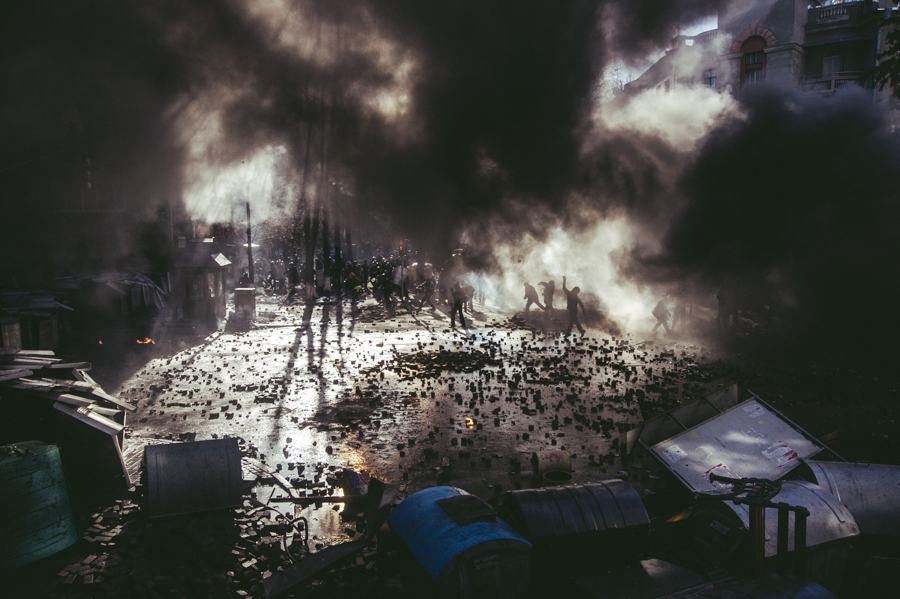
CULTURE of the CONFRONTATION
Maxim Dondyuk

Maxim Dondyuk
CULTURE of the CONFRONTATION
Maxim Dondyuk

CULTURE of the CONFRONTATION
Maxim Dondyuk
CULTURE of the CONFRONTATION
Maxim Dondyuk
From series Euromaidan: Culture of Confrontation
Maxim Dondyuk
From series Euromaidan: Culture of Confrontation
"Frequently a photographer attempts to contemplate, constructing a frame, a composition – and lets the emotions slip by! As a result he ends up with a beautiful, balanced, and completely dead picture." ~ Maxim Dondyuk
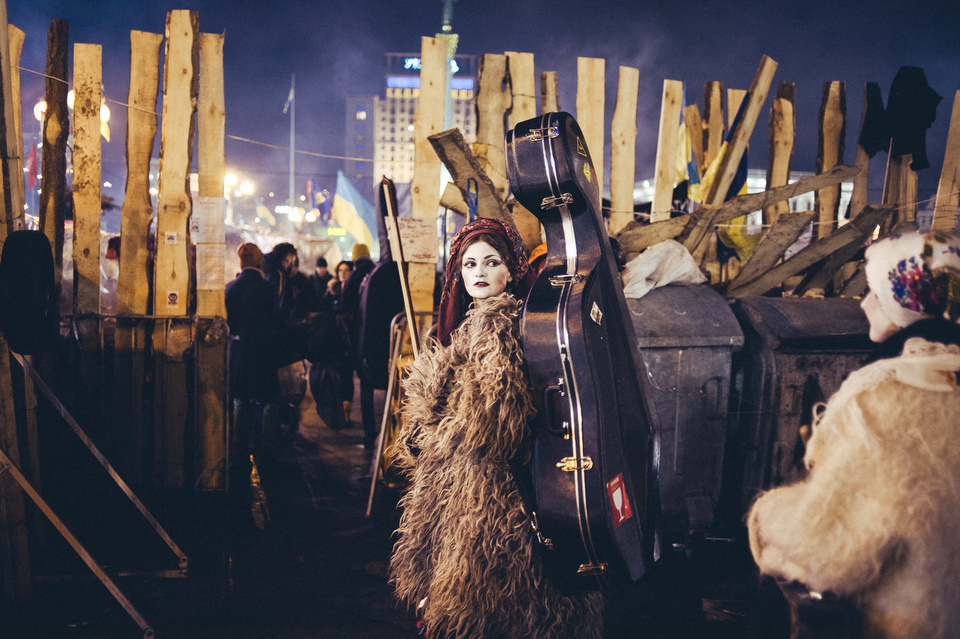

From series Euromaidan: Culture of Confrontation


Maxim Dondyuk

From series TB epidemic in UkraineMaxim Dondyuk
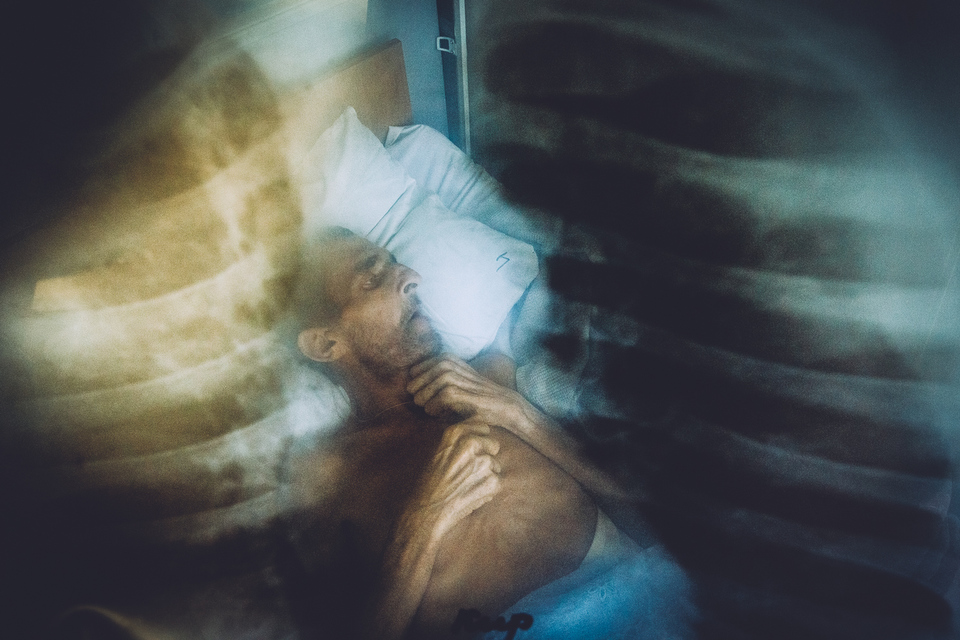
From series TB epidemic in Ukraine
Maxim Dondyuk

Maxim Dondyuk
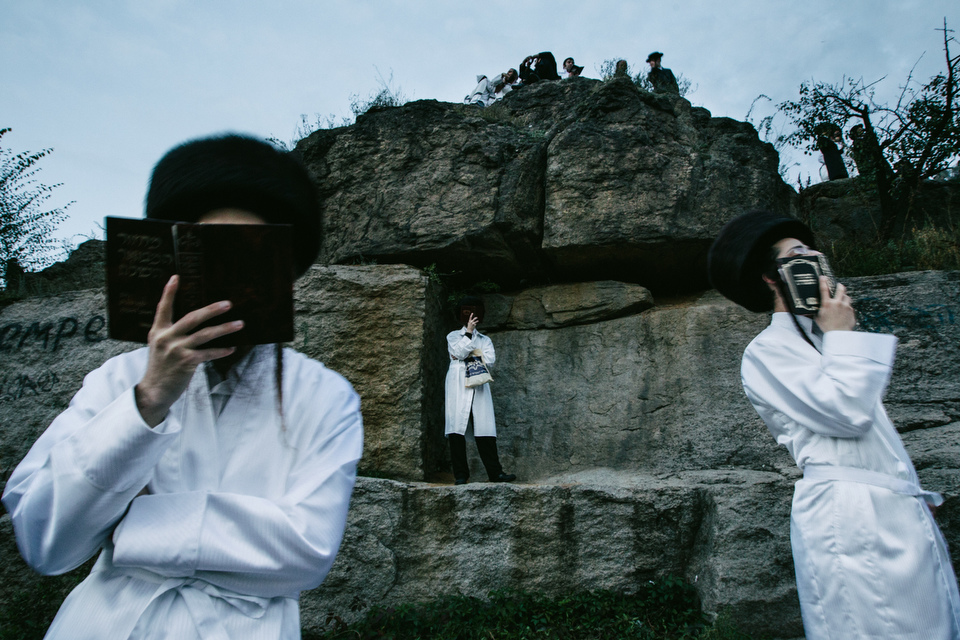
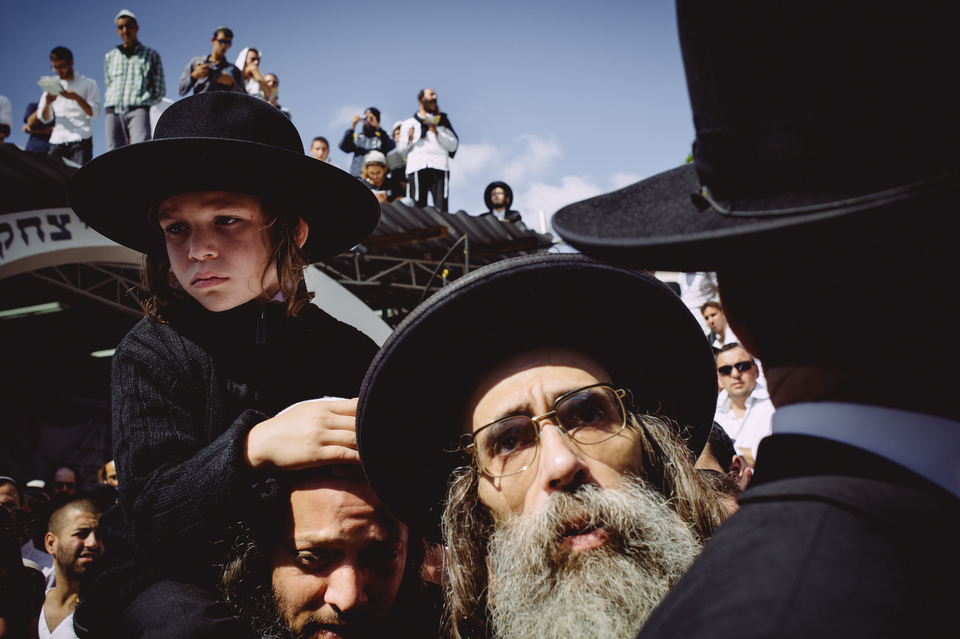
From series Rosh Hashana
 Maxim DondyukFrom series Rosh Hashana
Maxim Dondyuk

Maxim Dondyuk at work
Thursday, February 5, 2015

Preeminent Photojournalist and War Photographer, James Nachtwey's Powerful Lifetime Achievement Award Speech.

" I'm only one among many journalists who've committed themselves to covering conflicts and revealing social injustices, that have been hidden or ignored, but that are crying out to be corrected." 
~ James Nachtwey


Here is an overview of some of Nachtwey's work:
Please see my posts on my favourite photojournalist by clicking on links here
and here

Thursday, November 8, 2012


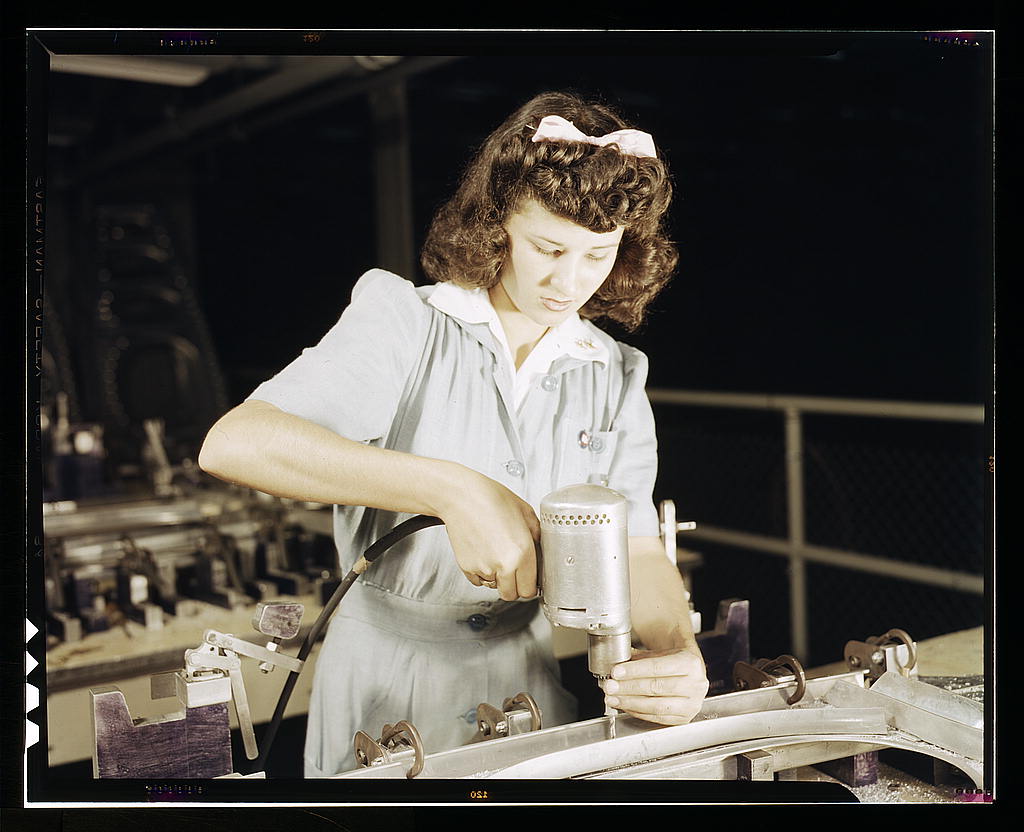
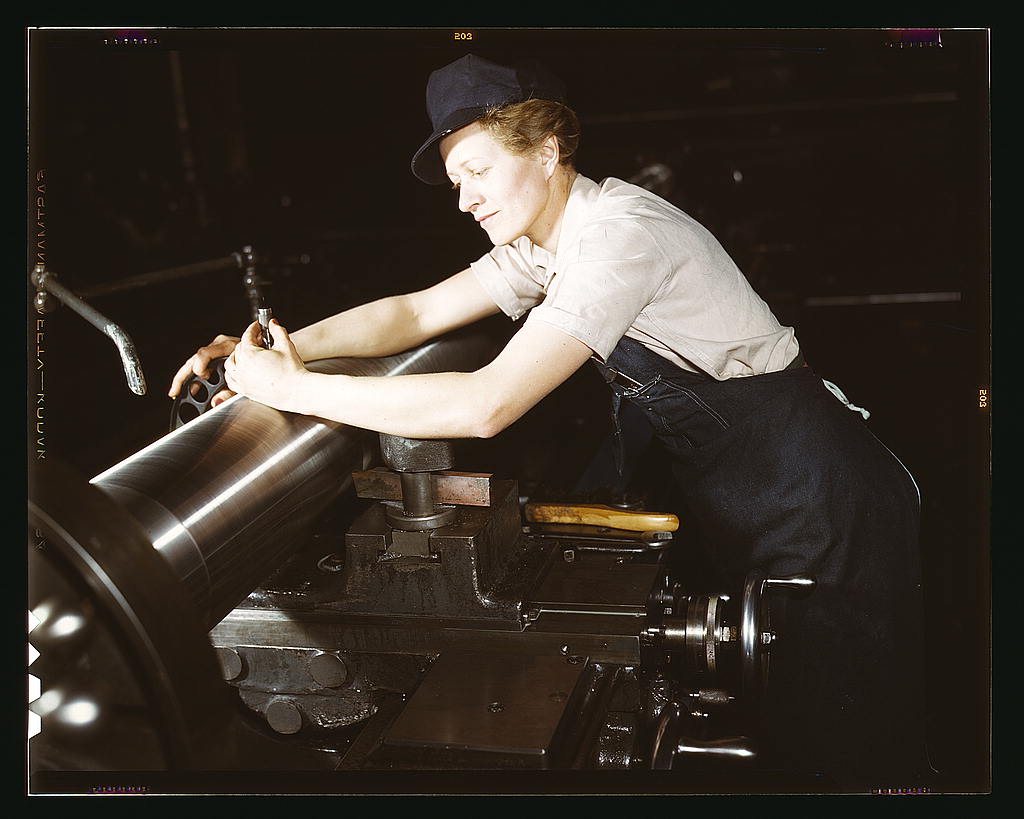
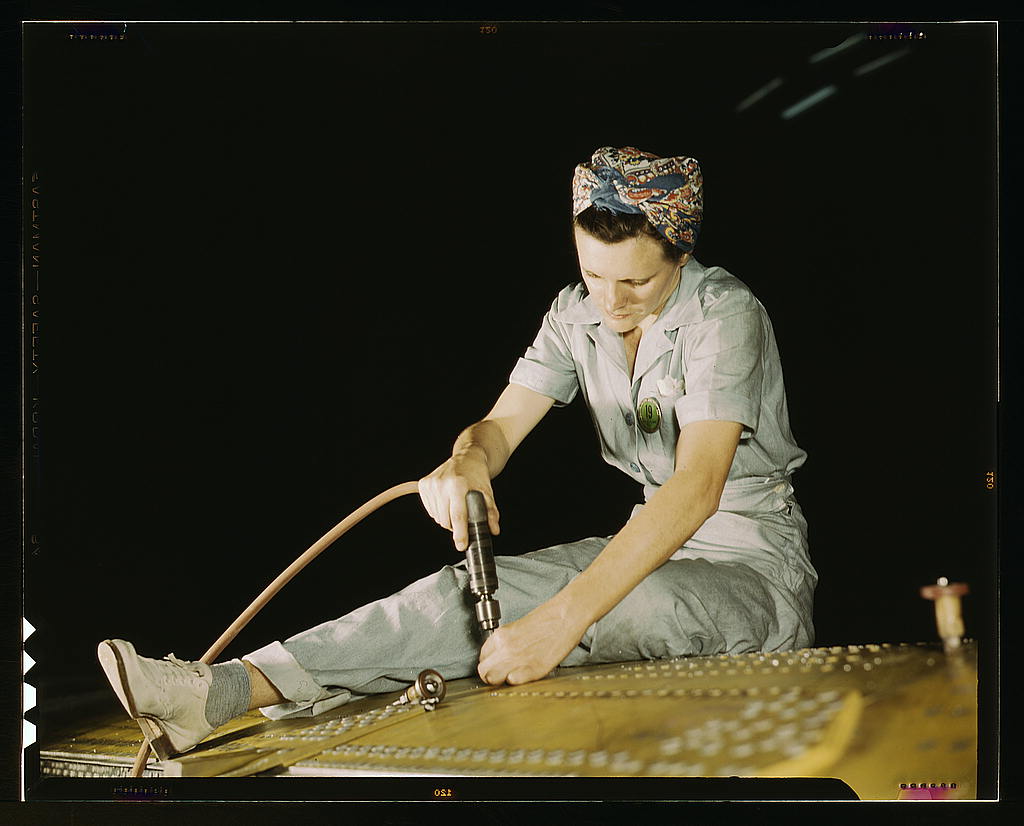
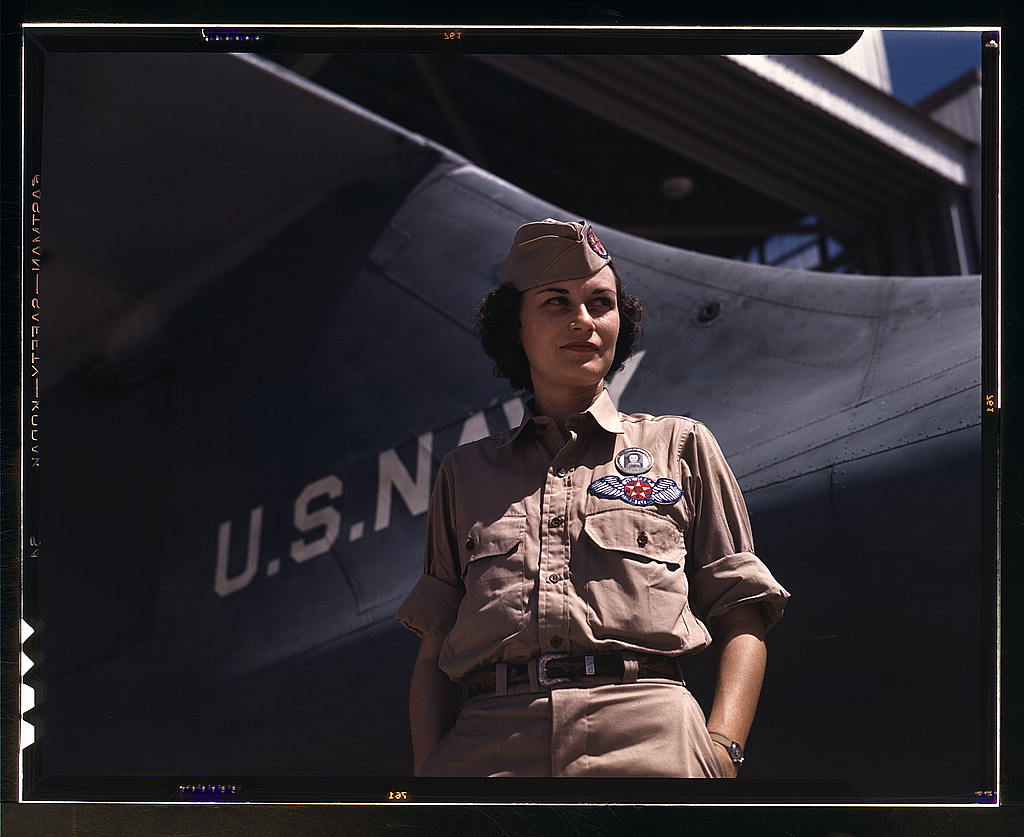
Rare WWII Colour Photos: 1940s Working Women

Before the United States entered World War II, several companies already had contracts with the government to produce war equipment for the Allies. Almost overnight the United States entered the war and war production had to increase dramatically in a short amount of time. Auto factories were converted to build airplanes, shipyards were expanded, and new factories were built, and all these facilities needed workers.

At first companies did not think that there would be a labor shortage so they did not take the idea of hiring women seriously. Eventually, women were needed because companies were signing large, lucrative contracts with the government just as all the men were leaving for the service. Working was not new to women. Women have always worked, especially minority and lower-class women. However, the cultural division of labor by sex ideally placed white middle-class women in the home and men in the workforce. Also, because of high unemployment during the Depression, most people were against women working because they saw it as women taking jobs from unemployed men.

 The start of World War II tested these ideas. Everyone agreed that workers were greatly needed. They also agreed that having women work in the war industries would only be temporary. The United States government had to overcome these challenges in order to recruit women to the workforce. Early in the war, the government was not satisfied with women’s response to the call to work. The government decided to launch a propaganda campaign to sell the importance of the war effort and to lure women into working.[via 1940s.org]


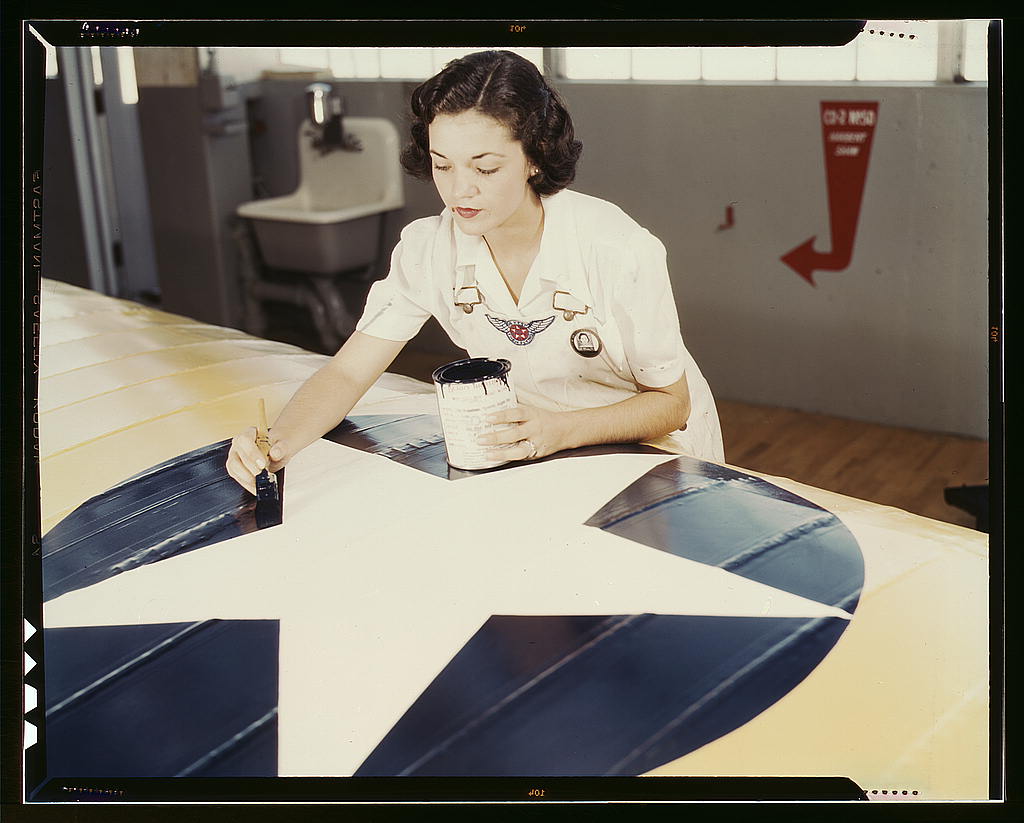
Painting the American insignia on airplane wings is a job that Mrs. Irma Lee McElroy, a former office worker, does with precision and patriotic zeal. Mrs. McElroy is a civil service employee at the naval Air Base, Corpus Christi, Texas. Her husband is a flight instructor
1942 August
Mrs. Eloise J. Ellis has been appointed by civil service to be senior supervisor in the Assembly and Repairs Department at the Naval Air Base, Corpus Christi, Texas. She buoys up feminine morale in her department by arranging suitable living conditions for out-of-state employees and by helping them with their personal problems.
1942 August


Rare color photos: 1940s working women
Aug. 1942 

Answering the nation's need for woman power, Mrs. Virginia Davis made arrangement for the care of her two children during the day and joined her husband at work in the Naval Air Base, Corpus Christi, Texas. 


Aug. 1942  Mrs. Doris Duke, a 26-year-old mother, is a civil service worker in the assembly and repair department at the Navy Air Base in Corpus Christi, Texas. She is seen reconditioning spark plugs. 


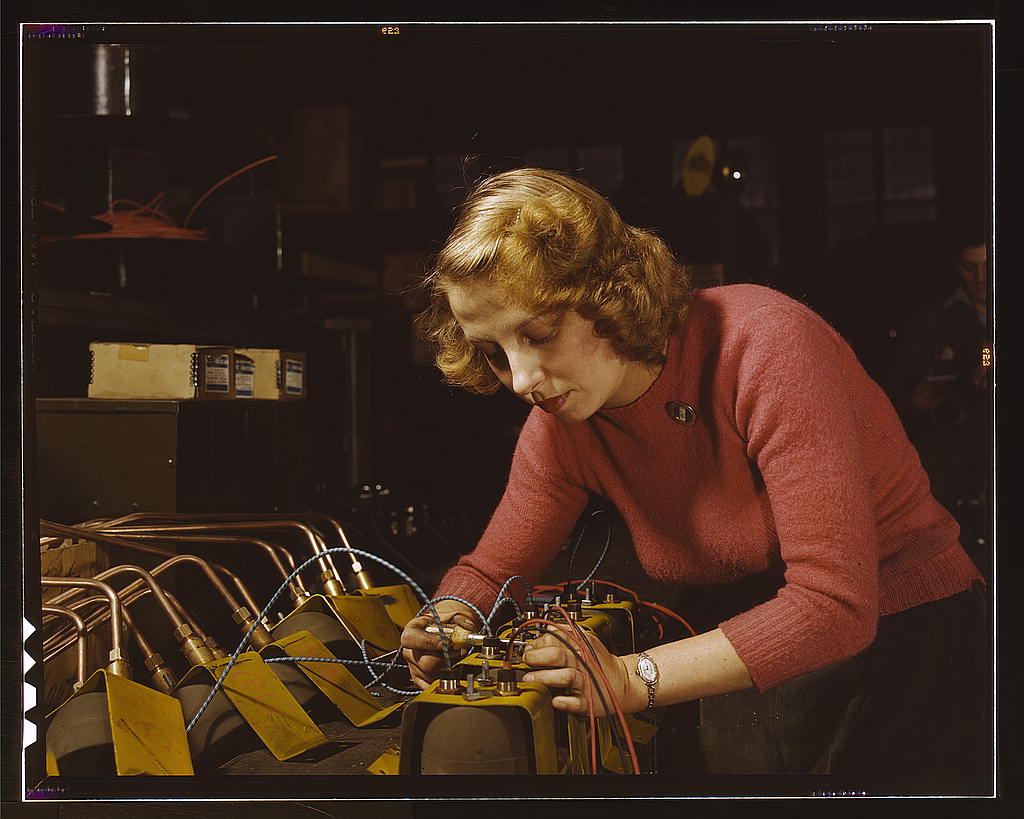
Woman aircraft worker, Vega Aircraft Corporation, Burbank, Calif. Shown checking electrical assemblies ~ 1942 June
Part of the cowling for one of the motors for a B-25 bomber is assembled in the engine 
department of North American [Aviation, Inc.]'s Inglewood, Calif., plant ~ 1942


All of these wonderful images were shot with a large format 4x5 camera on colour transparency (slide positive film)


Women workers install fixtures and assemblies to a tail fuselage section of a B-17F bomber 

at the Douglas Aircraft Company, Long Beach, Calif. Better known as the "Flying Fortress," 

the B-17F is a later model of the B-17 which distinguished itself in action in the South Pacific,

 over Germany and elsewhere. It is a long range, high altitude heavy bomber, with a crew of 

seven to nine men, and with armament sufficient to defend itself on daylight missions. ~ 1942


 Oyida Peaks riveting as part of her NYA training to become a mechanic in the

Assembly and Repair Department at the Naval Air Base, Corpus Christi, Texas


 A candid view of one of the women workers touching up the U.S. Army Air Forces

insignia on the side of the fuselage of a "Vengeance" dive bomber manufactured at

 Vultee's Nashville division, Tennessee. 1942
Women at work on bomber, Douglas Aircraft Company, Long Beach, Calif.~ 1942
This woman worker at the Vultee-Nashville is shown making final adjustments in 

the wheel well of an inner wing before the installation of the landing gear, Nashville,

 Tenn. This [is] one of the numerous assembly operations in connection with the 

mass production of Vultee "Vengeance" dive bombers~ 1943
Women at work on C-47 Douglas cargo transport, Douglas Aircraft Company, 

Long Beach, Calif.


Oct. 1942  Lathe operator machining parts for transport planes at the Consolidated Aircraft Corporation plant, Fort Worth, Texas. 
[IMG]
Formerly a sculptress and designer of tiles, Dorothy Cole converted her basement into a workshop to tin plate needles for valves for blood transfusion bottles prepared by Baxter Laboratories, Glenview Illinois. She turns in her profits to war bonds to provide a college education for her young nephew.


[IMG]
War production workers at Vilter Co. Ex-housewife, age 24, filing small parts. Her husband and brother are in the armed service.
Drilling a wing bulkhead for a transport plane at the Consolidated Aircraft Corporation plant, Fort Worth, Texas

Ex-stage orchestra musician, checking an M7 gun with gage, after turning out on a gun lathe. Her two brothers and husband are in the service. 1939
[IMG]
Women workers employed as wipers in the roundhouse having lunch in their rest room.
[IMG]
Two Navy wives, Eva Herzberg and Elve Burnham, entered war work after their husbands joined the service, Glenview Illinois. They assemble bands for blood transfusion bottles at Baxter Laboratories. Mrs. Burnham is the mother of two children.
Drilling on a Liberator Bomber, Consolidated Aircraft Corp., Fort Worth, Texas 


Lucile Mazurek, age 29, ex-housewife, husband going into the service, working on black-out lamps to be used on the gasoline trailers in the Air Force, Heil and Co., Milwaukee, Wisc.

[IMG]
Mrs. Irene Bracker, mother of two children, employed at the roundhouse as a wiper.
[IMG]
Mrs. Marcella Hart, mother of three children, employed as a wiper at the roundhouse, Clinton Iowa.
[IMG]
Mrs. Irene Bracker, mother of two children, employed at the roundhouse as a wiper.

Gist inspector, Mrs. Mary Betchner inspecting one of the 25 cutters for burrs before inserting it in the inside of a 105mm. howitzer at the Milwaukee plant of the Chain Belt Co. Her son is in the army; her husband is in war work.
Rosie the Riveter is a cultural icon of the United States, representing the American women who worked in factories during World War II, many of whom produced munitions and war supplies. These women sometimes took entirely new jobs replacing the male workers who were in the military. Rosie the Riveter is commonly used as a symbol of feminism and women's economic power

File:Rosie the Riveter (Vultee) DS.jpg

A real "Rosie the Riveter" working on the A-31 Vengeance bomber in Nashville, Tennessee (1943)