About Me

My photo
Toronto, Ontario, Canada
"To take a photograph is to align the head, the eye and the heart. It's a way of life." ~ Henri Cartier-Bresson
Showing posts with label under water photography. Show all posts

Friday, October 26, 2012

2012 WILDLIFE PHOTOGRAPHER OF THE YEAR WINNERS ANNOUNCED

The Winners of the Wildlife Photographer of the Year contest have been announced (which is run by the Natural History Museum and BBC Worldwide). In total 48,000 images were submitted from 98 different countries. Paul Nicklen was also picked as the ultimate winner (top image) for his depiction of penguins underwater. The exhibition is on now at the Natural History Museum in London and will be running through to March 2013.


WINNER WILDLIFE PHOTOGRAPHER OF THE YEAR: Paul Nicklen captured this in Antartica with a Canon 1D Mark IV and an 8-15 F/4 lens

"In a moss-draped rain forest in British Columbia, towering red cedars live a thousand years, and black bears are born with white fur." Photo by Paul Nicklen. Paul was less than a meter away from this bear when he shot this image with a Canon 1Ds Mark II and a 16-35 F/2.8 lens.

Images: Jasper Doest

Images: Larry Lynch. Larry Lynch got this shot by lining up and hitting the gator with a flash turned as low as it would go. The light reflecting off of the tapetum licidum - the same thing you find in a cat - caused the eyes to glow red. This was shot in Myakka River State Park in Florida with a Nikon D2X and a 80-400mm F/4.5 - 5.6

Image: Richard Peters

Image: Sergey Gorshkov

Image: Cristóbal Serrano

Image: Anna Henly

Image: Kim Wolhuter

Monday, August 27, 2012

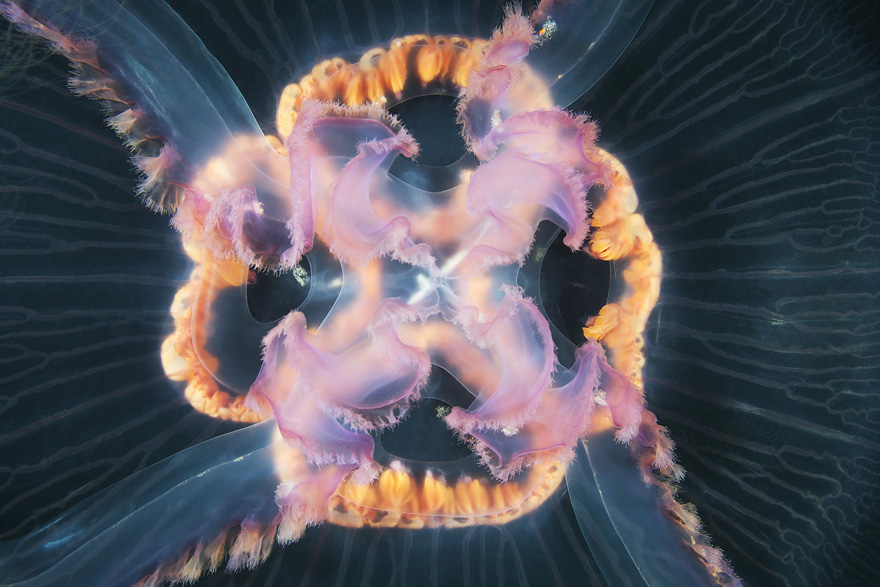
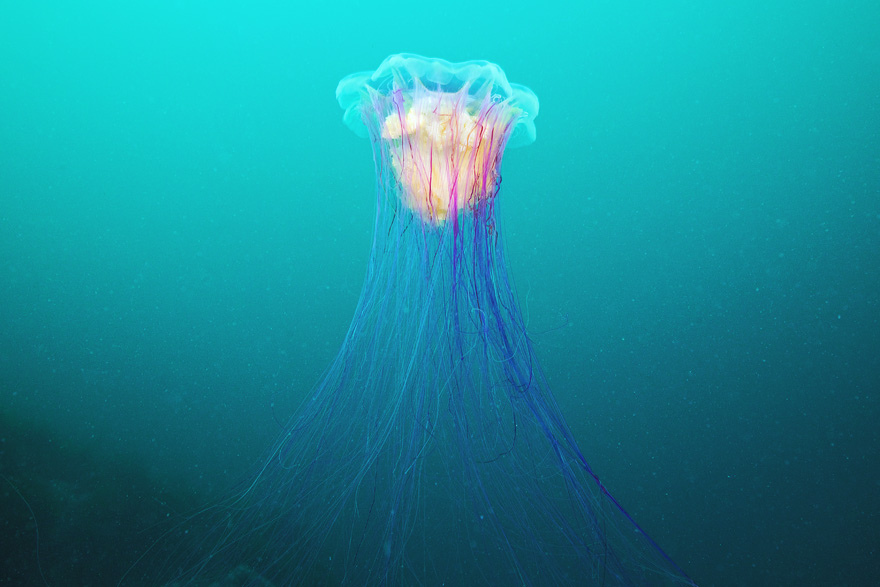
Fantastic Underwater Images of Jellyfish by Marine Biologist/Photographer ~ Alexander Semenov

Alexander Semenov's Bio:
In 2007, I graduated from Lomonosov’s Moscow State University in the department of Zoology. I specialized in the study of invertebrate animals, with an emphasis on squid brains. Soon after, I began working at the White Sea Biological Station (WSBS) as a senior laborer. WSBS has a dive station, which is great for all sorts of underwater scientific needs, and after 4 years working there, I became chief of our diving team. I now organize all WSBS underwater projects and dive by myself with a great pleasure and always with a camera.
When I first began to experiment with sea life photography I tried shooting small invertebrates for fun with my own old dslr camera and without any professional lights or lenses. I collected the invertebrates under water and then I’ve shot them in the lab. After two or three months of failure after failure I ended up with a few good pictures, which I’ve showed to the crew. It has inspired us to buy a semi-professional camera complete with underwater housing and strobes. Thus I’ve spent the following field season trying to shoot the same creatures, but this time in their environment. It was much more difficult, and I spent another two months without any significant results. But when you’re working at something every day, you inevitably get a lot of experience. Eventually I began to get interesting photos — one or two from each dive. Now after four years of practice I get a few good shots almost every time I dive but I still have a lot of things that need to be mastered in underwater photography.[via clione.ru]


As head of the scientific diver’s team at the White Sea Biological Station in northwestern Russia, marine biologist Alexander Semenov has been studying—and photographing—the life cycle of Cyanea capillata, aka the lion’s mane jellyfish. The creatures only live for about six months, usually from May to September, but grow to a diameter of two to three meters with tentacles as long as 36 meters. “I’m trying to study marine life through the lenses, and from year-to-year I get more and more knowledge about the underwater world of cold waters of the north,” Semenov says.[via PDN]


 Alexander Semenov at work


Portrait of Alexander Semenov

Monday, August 6, 2012

Tiger Shark Steals $15,000 Worth of Camera Equipment

This female Tiger shark, named Emma,  got fed up with getting her picture taken and pulled a *Chris Martin ( Coldplay)


Chris Martin Attacks Paparazzi NYC


Saturday, February 11, 2012

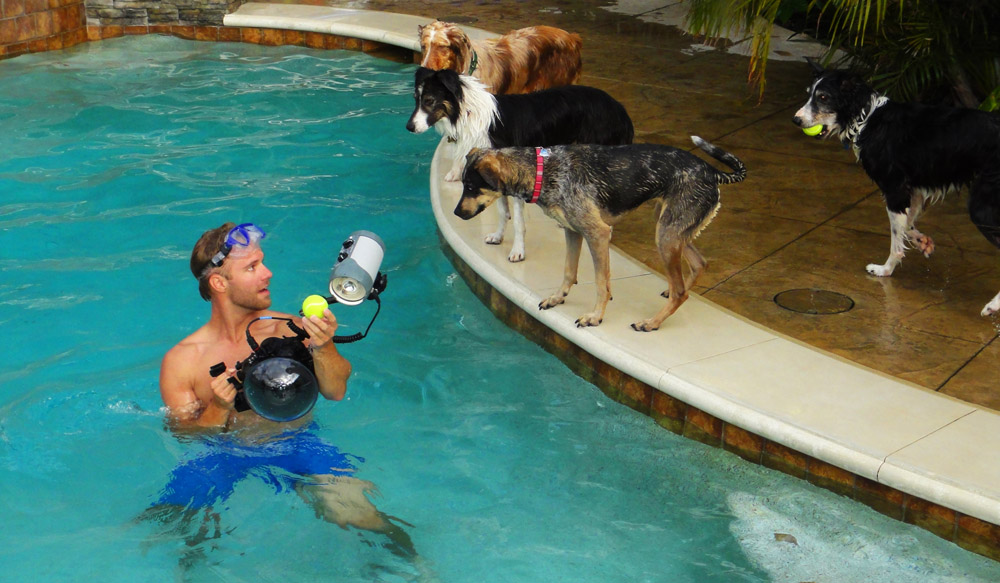
PHOTOGRAPHER SETH CASTEEL’S REMARKABLE UNDERWATER DOG PHOTOGRAPHY

I love this underwater dog series from photographer Seth Casteel. See more from Seth here: littlefriendsphoto.com

If you like Seth Casteel's underwater dog photography, please show some love and follow his official Facebook page "Little Friends Photo" here: facebook.com/LittleFriendsPhoto


Seth with his models


Wednesday, December 21, 2011

Edith Widder: Incredible Photos of Bioluminescent Sea Creatures

Edith Widder (born 1951) is an American oceanographer, marine biologist, and the Co-founder, CEO and Senior Scientist at the Ocean Research & Conservation Association.

A specialist in bioluminescence she has been a leader in helping to design and invent new instrumentation and techniques that enable scientists to see the ocean in new ways. These include HIDEX, a bathyphotometer which is the U.S. Navy standard for measuring bioluminescence in the ocean, and a remotely operated camera system, known as Eye in the Sea (EITS), an unobtrusive deep-sea observatory.

 *click on images for a large view.
The deep-sea shrimp (Acanthephyra purpurea) spews bioluminescence out of its mouth, like a fire-breathing dragon. The light serves to distract or temporarily blind a predator like this viper fish (Chauliodus danae). To create this image, Edith Widder combined low-light video of the spewing shrimp with a flash photograph of the shrimp and the viperfish photo.


"Success in life depends on how well you handle Plan B. Anyone can handle Plan A." 
~ Edie Widder


If the jellyfish is caught in the clutches of a predator, it tries to lure a larger predator to attack its assailant, giving it an opportunity to escape.


Inhabiting depths from 500 to 2,500 meters, the viperfish (Chauliodus sloani) has light organs everywhere — on the belly, in the mouth, in the scales, in the fins, in a mucous layer that lines the back and belly and one under each eye — all used for different purposes.


The light organs of the deep-sea scaleless dragon fish inspired Edith Widder to develop the Eye-in-the-Sea camera. It produces red bioluminescence from light organs on the face and uses it like a sniper scope. Because it can see red light that most deep sea animals can’t, it can see without being seen.
This blackdevil angler fish, Melanocetus johnsonii, has a luminescent lure that she uses to attract prey and to identify herself to potential mates Edith Widder. Unlike most animals in the ocean that synthesize their light-producing chemicals from the food  they eat, this angler fish produces light with the aid of bioluminescent bacteria.


"As I descended through the depths, tethered to the surface inside my bulky bubble-headed diving suit, I was completely unprepared for the beautiful show to come, when at 880 feet below the surface of the sea, I turned out the lights. While I bobbed gently up and down like a tea bag on its string, I was engulfed in explosions of light, swirling and streaming like the wildly chaotic stars in Van Gogh’s “Starry Night.”
 ~ Widder


The common comb jelly (Bathocyroe fosteri) is found 200 to 1,000 meters below the ocean surface. It produces bioluminescence from along its comb rows. Though its body is transparent, its gut is pigmented to mask the light emitted by its luminescent prey.


The cheek lights on the deep-sea Loosejaw Stoplight Fish(Malacosteus sp.) may serve to locate prey in the dark, but they likely also function in mate selection, since the organs of males are much larger than those of females. When not in use, these lights can be rotated and pulled back into the fish’s head, sort of like the headlights on some cars. They also can be flashed on and off. So why retract them? Probably because they have a highly reflective layer that helps direct light outward. This shiny surface, in contrast to the fish’s velvety black body, might inadvertently reveal the animal’s whereabouts to predator or prey.


Blue is the most common color of bioluminescence in the ocean, but there are interesting exceptions, like this deep-sea polychaete worm (Tomopteris).

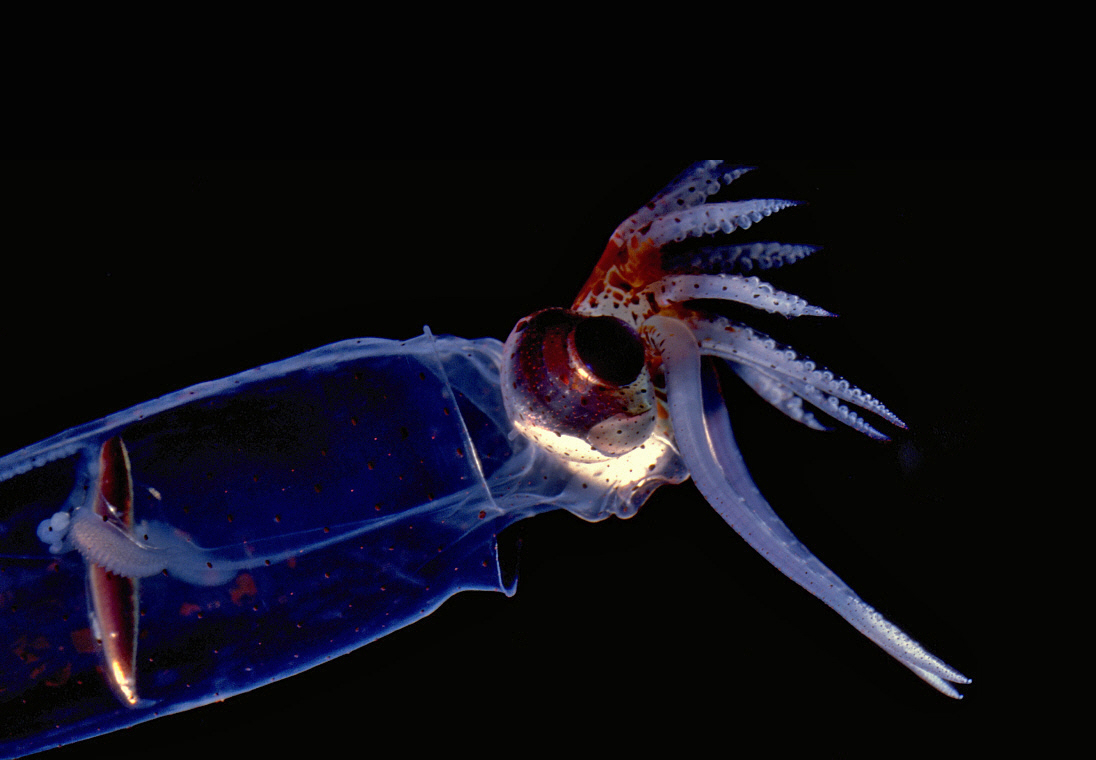
Deep-sea cranchid squid Taonius pavo by Edith Widder